

Warning 1: this post is about enjoying BTC/BTCC mining from a technical angle. It is not investment advice. Please don’t make investment decisions based on it.
Warning 2: this post is about the BTCC chain. As of publication, BTCC’s total network hashrate is around 8.32 PH/s. This is not the BTC chain, whose hashrate is around 1073 EH/s. They are not in the same league — please keep them straight.
It started simply enough: I came across a project pitched as “walking the BTC road again.” Some people call it “BTC for Gen Z.”
It’s called BTCC, official site: www.btc-classic.org.
According to the project, BTCC is a PoW decentralized currency rebuilt on Bitcoin Core v28.1, aiming to reproduce the early Bitcoin mining experience: CPU/GPU friendly, low difficulty at the start, ordinary users able to take part.
That landed squarely on me.
Because ten years ago, I actually mined BTC. I ran a few Antminer U3s on F2Pool. Then the regulatory environment shifted and I sold the miners — 180 yuan each.
Ten years later, I saw one again on Xianyu.
Price: 25 yuan, shipping included.
I thought about it. Isn’t this the boomerang of fate? So I bought it.
Hashrate, and what these machines actually are
If you want to take part in PoW mining, you need hashrate.
BTCC uses the same SHA-256 algorithm as BTC. But how efficiently different devices run SHA-256 varies enormously.
You can think of mining as an extremely boring, extremely repetitive math lottery where whoever guesses right first wins.
A CPU can guess. A GPU can guess. An ASIC can guess. The difference: some guess a few million times a second, others trillions.
Here’s a quick rundown of the kinds of hardware an ordinary person can realistically get hold of.
CPU mining
A CPU is the easiest device to obtain. In theory, if you own a computer, you can mine.
The problem is that CPUs were never built for hashing. They do a bit of everything, and in the face of repetitive SHA-256 work they’re clumsy.
The CPU I tested:
Intel Xeon E5-2690 v4
An old 2016 server processor, roughly:
- Hashrate: about 100 MH/s
- Power: about 135W
100M sounds like a lot, but on a pool it’s basically an ant carrying crumbs.
How slow is it? Slow enough that the pool may not even want to wait for your answer.
And once a CPU starts mining it sits at 100% utilization. Fans spin up, the system feels like a ten-year-old phone, and in the end the earnings are close to nothing.
So the conclusion is simple:
CPU mining is fine as an experience. Don’t mine seriously with it.
GPU mining
A GPU is something plenty of people already have at home. Graphics cards are good at parallel work, which suits repetitive hashing better than a CPU does.
The GPU I tested:
NVIDIA RTX 2080 Ti
An old 2018 flagship card. Measured, roughly:
- Hashrate: about 2 GH/s
- Power: about 250W
At this level, mining starts to feel like actual participation.
In BTCC’s airdrop pool, this card pulls roughly 0.01 BTCC per hour, around 0.2 BTCC a day.
That’s not getting-rich money, or even making-money money. But it’s enough that you feel it: I really am taking part in a PoW network.
For me, that matters more than the number itself.
The card loads up, the pool starts showing hashrate, Accepted Shares start appearing on the page — it’s the same feeling as the first time I watched a miner start working, ten years ago:
The machine isn’t just making noise. It’s actually computing.
ASIC mining
If CPU mining is carving a chip with a kitchen knife, and GPU mining is drilling holes with a power drill, an ASIC is the assembly line built specifically for this job.
An ASIC chip can do almost nothing else. It computes one algorithm. That’s exactly why it’s so efficient at it.
For SHA-256, ASICs are the professionals.
Antminer U3
And that’s the star of the headline:
Antminer U3
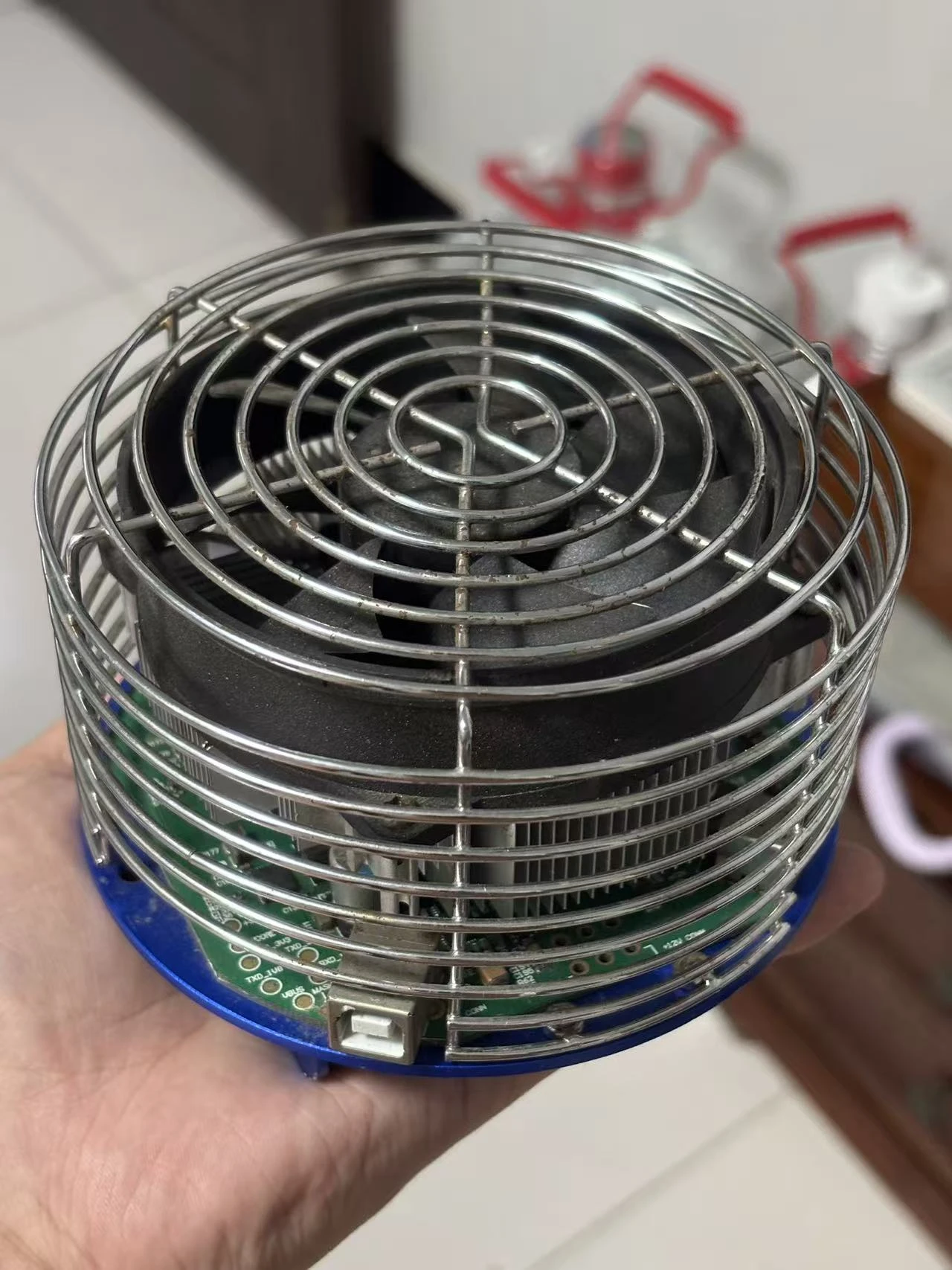
A desktop USB SHA-256 miner that Bitmain released in 2015.
Inside:
- 4x BM1382 chips
- 28nm process
- Hashrate: about 63 GH/s
- Power: about 60W
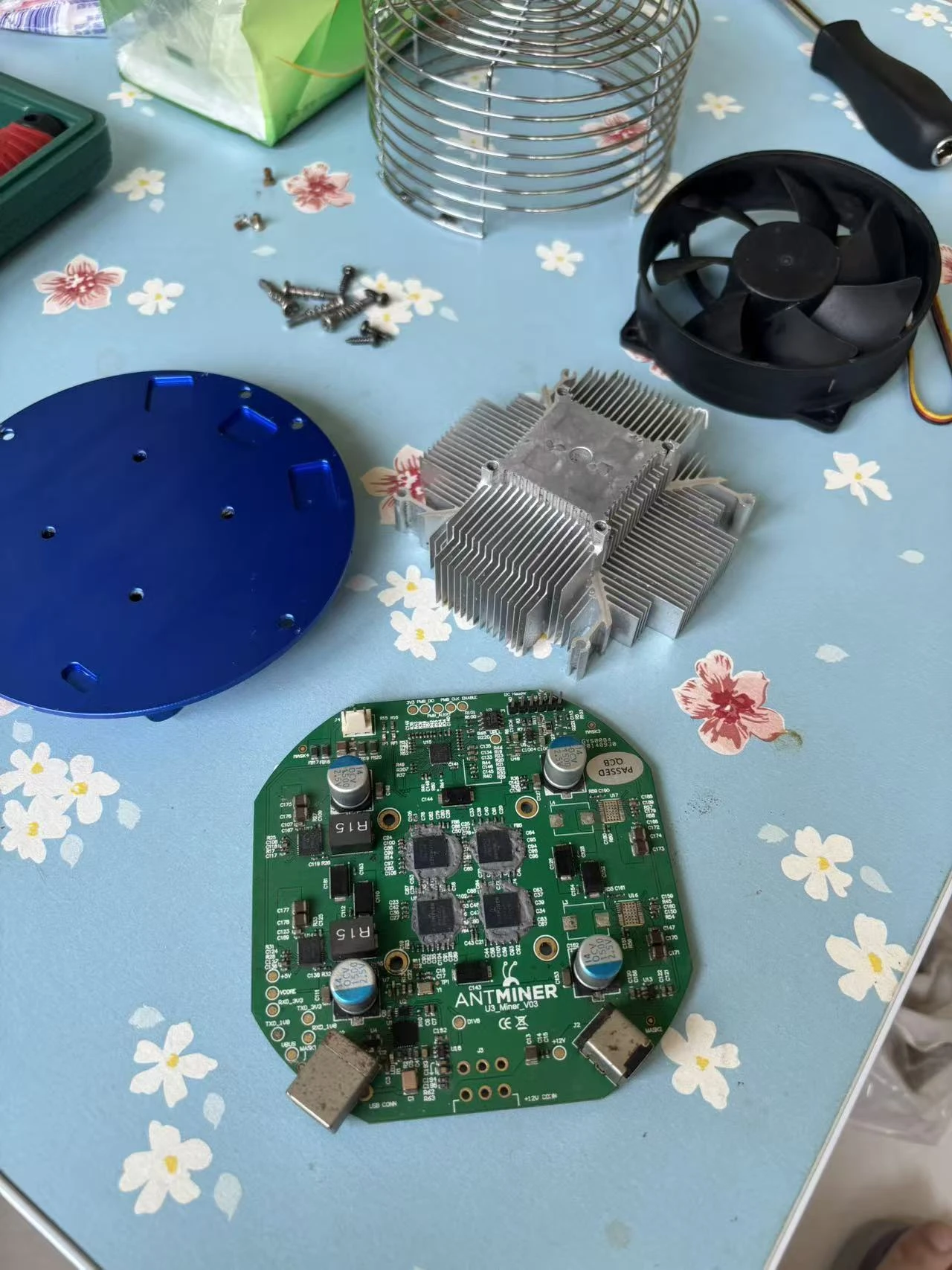
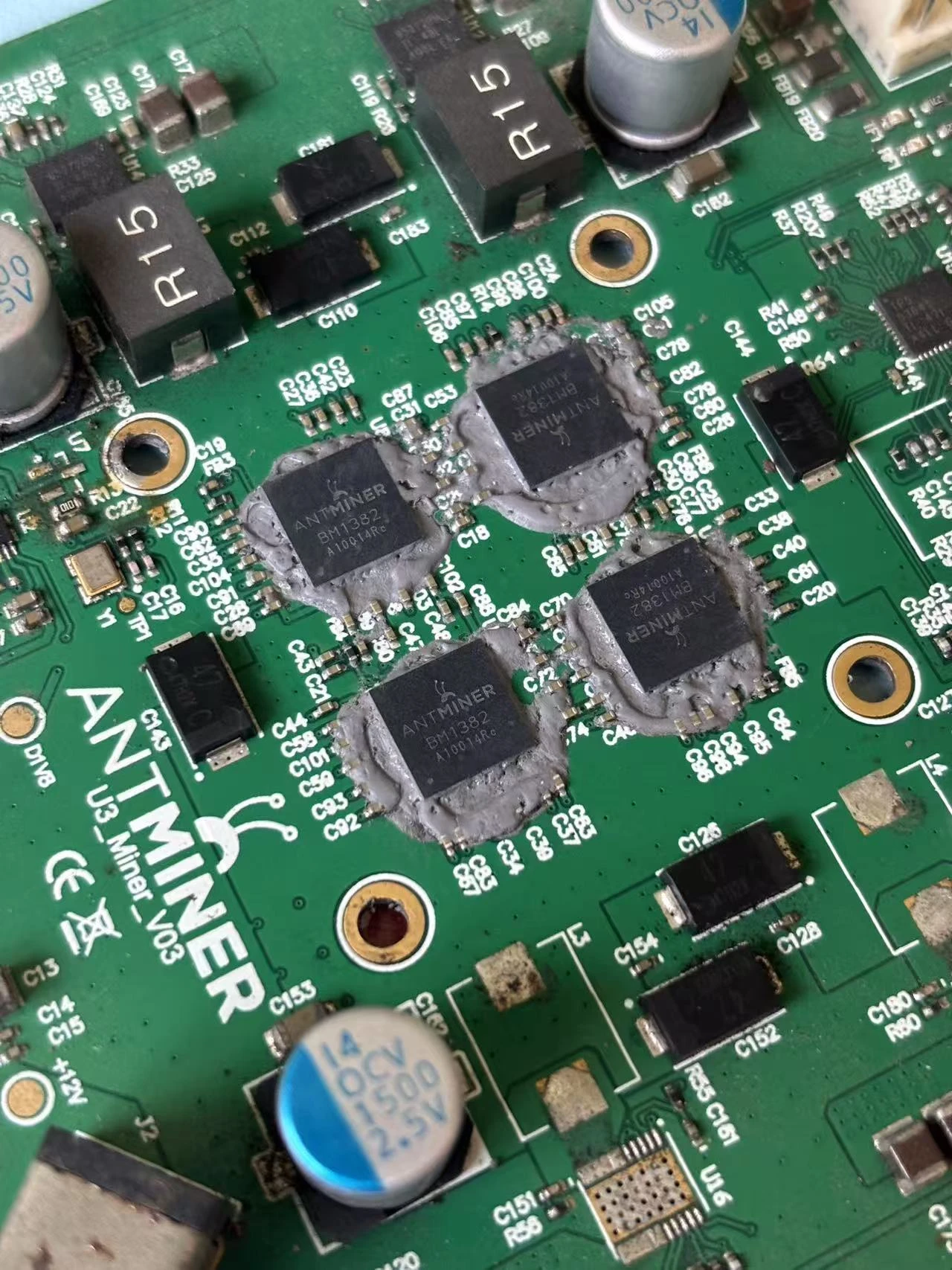
By today’s standards that hashrate is ancient.
It certainly can’t mine BTC. Against BTC’s current network hashrate, a U3 is an abacus challenging a supercomputing center.
But point it at BTCC, a new chain in its low-difficulty phase, and things get interesting.
Which fits the “walk the BTC road again” theme rather well.
The point isn’t how much you earn. It’s feeling that early PoW participation again:
Plug it in, connect to a pool, the fan starts turning, hashrate shows up on the pool page.
A miner from ten years ago is doing the thing it’s best at again.
What makes it better: the seller I bought it from seemed to be a scrap collector. He probably didn’t know what it was and was just disposing of a strange piece of electronic junk.
I wasn’t expecting much either. 25 yuan with shipping — worth it as a desk ornament.
Then it arrived and turned out:
It actually works.
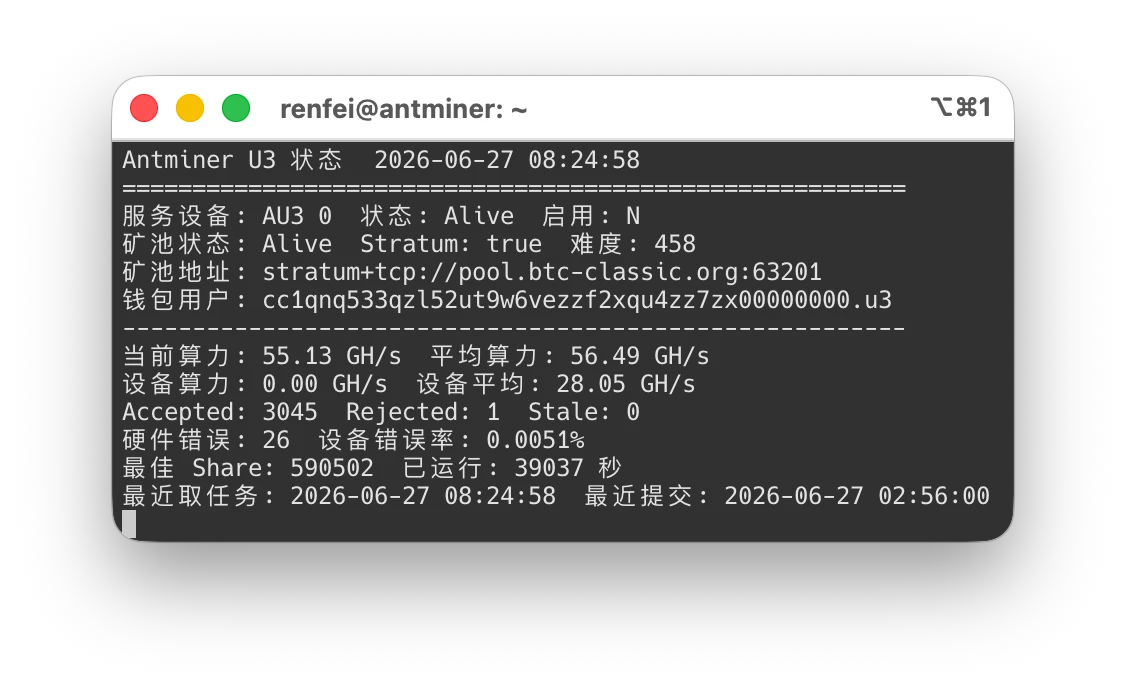
And it’s in decent shape — runs perfectly normally.
It felt like pulling a time machine out of a scrap heap.
Bitaxe Gamma 601
Besides the antique, I also tried a more modern little miner:
Bitaxe Gamma 601
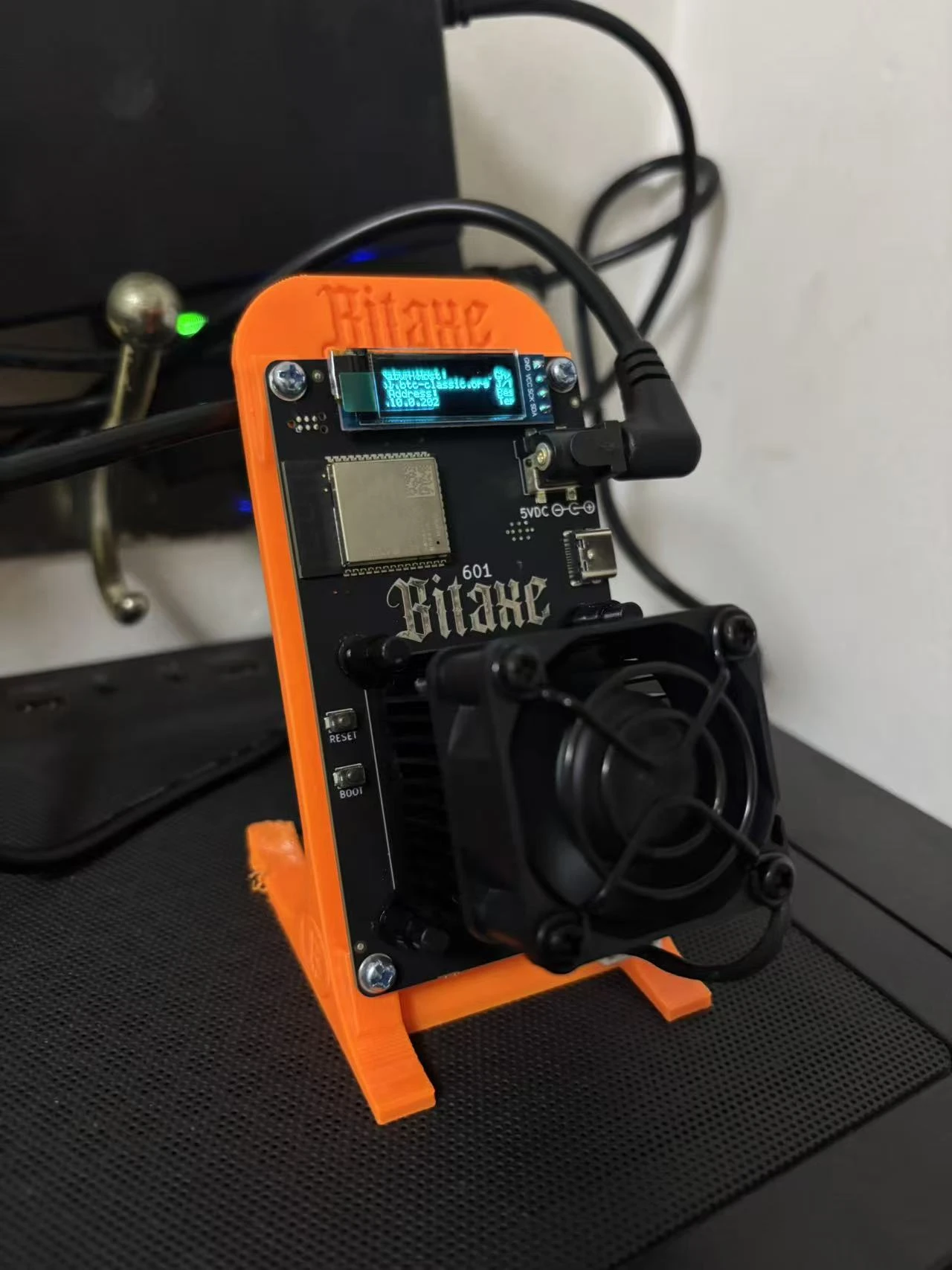
Inside is a BM1370 ASIC, roughly:
- Hashrate: about 1.2 TH/s
- Power: about 18W
Machines like this are often called “lottery miners.”
Why? Because plenty of people don’t buy them to mine steadily — they buy them to SOLO mine BTC.
SOLO means you mine on your own: if you find a block, the entire block reward is yours; if you don’t, you get nothing.
Like buying a lottery ticket.
At BTC’s current network hashrate, a 1.2T machine hitting a BTC block on its own has an expected wait that probably runs into thousands of years.
But probability is a strange thing.
It might not hit for a thousand years. It might hit in the next second.
Rationally, though, this is entertainment. If you hit, it’s a windfall; if you don’t, that’s just what happens.
If you don’t want to gamble on BTC, you can point it at BTCC.
In BTCC’s airdrop pool, a Bitaxe Gamma 601 pulls roughly 0.1 BTCC per hour, around 2.4 BTCC a day.
Still not a get-rich scheme, but well suited to experiencing PoW mining.
Small, quiet, low power, with a web panel showing real-time hashrate. It doesn’t scream like a hair dryer the way traditional miners do — more like a potted blockchain plant on your desk.
Renting hashrate
Besides buying a machine, there’s another way to play: renting.
Some farms and platforms rent out hashrate. You can rent an hour or a few, see what large-scale mining feels like, or take a SOLO gamble with it.
To avoid sounding like an ad, I won’t recommend any specific platform — go look them up yourself.
Before publishing, I spent 1.2 USDT renting 365 TH/s for an hour and pointed it at BTCC’s SOLO pool.
I only meant to try it out.
Then things got strange.
I’ll tell that part later.
Pools
BTCC’s official pool currently supports three mining modes:
- PPLNS shared pool
- SOLO
- AIRDROP pool
They suit completely different people.
PPLNS shared pool
PPLNS is roughly “everyone mines together.”
Everyone on the pool contributes hashrate. When the pool finds a block, the reward is split according to each miner’s recent share of work.
The upside is stability.
You don’t have to wait for a block of your own, and you don’t carry the full randomness. Keep contributing hashrate and you keep earning something.
If you just want to see output on the pool every day and feel continuous mining, PPLNS is the best fit.
In short:
Want steady? Pick PPLNS.
SOLO
SOLO is a different thing entirely.
You mine alone. If you find a block, the whole block reward is yours. If you don’t, you get nothing.
There’s no “effort bonus” and no “participation prize.”
It’s pure gambling.
That’s also where the appeal is: the payout isn’t linear, it’s wildly variable.
You might mine for a day, a month, a year and get nothing. Or you might hit a block shortly after starting.
So SOLO suits two kinds of people:
Players with large hashrate, and people who simply want to gamble and feel their heart rate.
SOLO mining BTC with small hashrate is basically buying lottery tickets. On an early, low-difficulty chain like BTCC, small hashrate feels a lot more involved.
AIRDROP pool
The airdrop pool isn’t a standard pool payout model. It’s more like a subsidy BTCC designed so small-hashrate users can still take part.
Not every chain does this — it’s one of the more distinctive things about BTCC right now.
If your hashrate is between 100M and 2T, the airdrop pool fits well.
Its purpose isn’t to make you rich. It’s to stop ordinary players from being flattened by professional farms on day one.
You can join the network for real with a CPU, a GPU or a small ASIC. Even with modest hashrate, you see a little output every hour.
For a theme like “walk the BTC road again,” that design genuinely helps.
Price and investing
This post is mostly about the technology and the experience of mining, but plenty of people will naturally ask:
Is this worth investing in?
Does it have a future?
Is it too late to buy now?
All I can say is:
Please be careful.
None of what follows is investment advice. It’s just what I’ve observed.
Hashrate and security
BTCC is very young, with only a few petahash on the whole network.
What does that mean?
It means it’s still a long way from a mature PoW network, and it’s more exposed to large-hashrate attacks.
BTC is secure because of the staggering amount of global hashrate behind it. BTCC is at a very early stage — its security, attack resistance and ecosystem maturity all need time.
On top of that, BTCC’s pools are fairly concentrated right now.
There’s mainly the official pool and one third-party pool. Whether that third-party pool is fully independent is hard to confirm.
Concentrated hashrate runs against what PoW decentralization aims for in the long run. But for a project that just started, it’s a common early-stage problem.
So:
It’s interesting. It’s nowhere near mature.
There’s no unified experience across the official wallet, open source wallets and community wallets either.
Because the project started late, the source code, wallet programs and tool scripts are scattered. None of the well-known wallets support BTCC yet.
That makes the onboarding bar high for new users. You have to understand mining, but also wallets, nodes, private keys, address formats and pool configuration.
For someone who likes tech, that’s the fun. For an ordinary user, it’s a wall.
Price volatility
BTCC is too young: few users, and very limited trading depth.
There’s no deep order book on a mature exchange and no real market liquidity. Trading mostly happens through the OTC service the project provides, as a BTCC/USDT pair.
Which means the price moves easily on small money.
In a market that shallow, the price you see isn’t necessarily the price you can actually buy or sell size at.
So this is worth saying clearly:
Don’t apply mature-asset logic to a very early project.
It may be interesting. The risk is also high.
Why bother
After all that risk, why am I still messing with it?
Because for me the fun isn’t financial. It’s technical, and it’s the experience.
BTC today is no longer something an ordinary person can casually mine.
The network hashrate is too high, professional farms are too strong, and electricity costs, hardware costs and economies of scale are nothing an amateur can match.
You can still buy BTC, hold BTC, study BTC. But “mine BTC with your own hands” is, for most people, no longer realistic.
A project like BTCC, at least in its early phase, opens a small door again.
You can try it with a CPU.
Run it on a GPU.
Buy a small ASIC.
Or plug a miner from ten years ago back into the wall.
That alone is kind of romantic.
It’s like reenacting an era that has already passed.
Walking the BTC road again
This is the part of BTCC’s theme I actually agree with: walking the BTC road again.
It may or may not reproduce BTC’s success, and it shouldn’t be read simply as “the next BTC.”
But it does let ordinary people take part in early-stage PoW again.
From CPU mining to GPU mining to ASICs; from configuring a wallet to joining a pool to waiting for hashrate to show up; from Accepted Shares to daydreaming about SOLOing a block someday.
On today’s BTC network, all of that is far out of reach for ordinary people.
On BTCC, you can at least live through it once more.
It takes me back to mining BTC ten years ago.
Back then I ran several Antminer U3s on F2Pool. Later, as the regulatory environment shifted, I sold them off at 180 yuan each.
Ten years later I saw a U3 on Xianyu for 25 yuan, shipping included.
I bought it back.
The seller seemed to be a scrap collector who didn’t recognize what it was. I didn’t expect it to still work — I figured it would be fine as a collectible.
It turned out to be in pretty good shape and runs perfectly.
Got lucky.
An unexpected block
This part wasn’t in the plan.
I meant to write a post about buying back an old miner and trying out BTCC mining.
But just before publishing, I casually spent 1.2 USDT to rent 365 TH/s for an hour and pointed it at BTCC’s SOLO pool.
My thinking was simple:
It’s a drink’s worth of money. Try it. If it doesn’t hit, it was an experience.
And then it actually found a block.
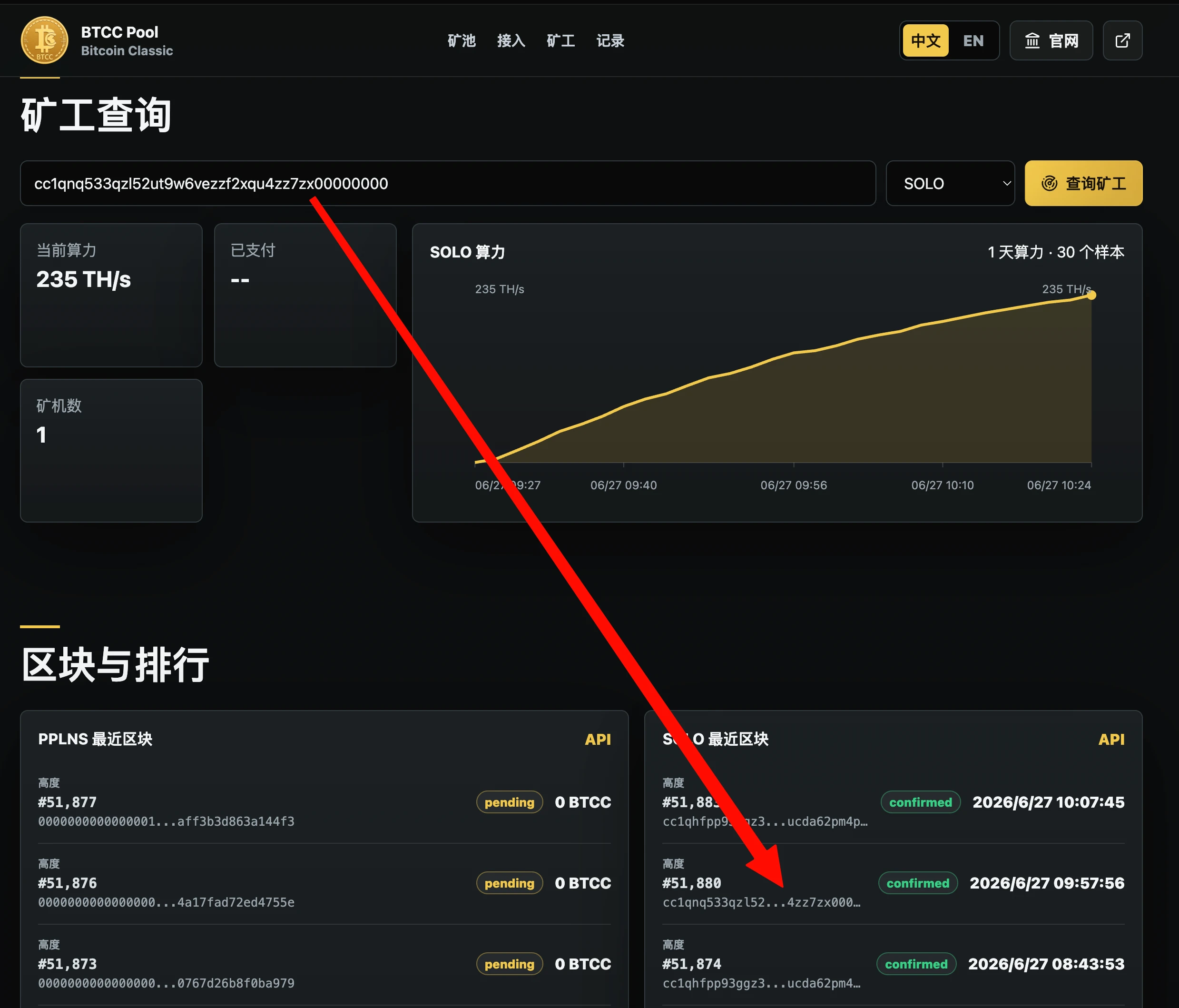
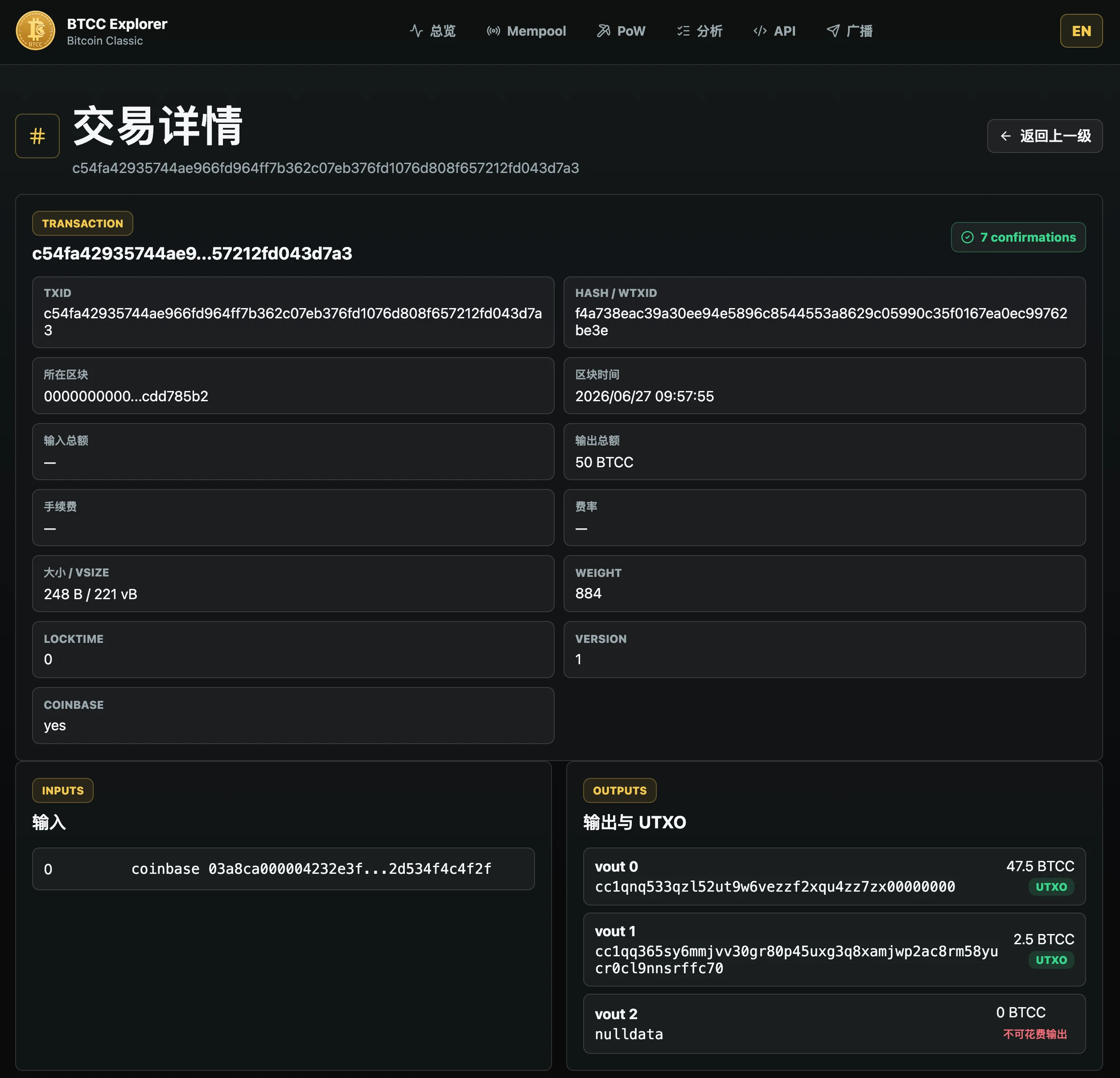
The first solo block of my life. The full block reward, 50 BTCC, all mine.
The feeling in that moment was strange.
Not because of what it’s worth, but because I’d finally felt the rawest, most electric moment PoW has to offer:
You’re not watching someone else mine.
You’re in it, and you actually found a block.
That’s probably BTCC’s biggest meaning right now.
It lets ordinary people feel again that mining isn’t the roar of a distant farm, or a number on an exchange chart.
It can be a 25-yuan old miner.
It can be an old graphics card.
It can be a little lottery machine on your desk.
Or it can be the heartbeat of a block that suddenly lands.
Coda: what’s being retraced isn’t a wealth story, it’s participation
I don’t know what becomes of BTCC.
It might grow, or it might go to zero. It might attract more developers, or it might be a flash in the pan.
Nobody can guarantee any of that.
But at least at this stage it gave me a chance to plug a miner back in, configure a pool again, watch the hashrate curve move, and enjoy PoW again.
What I bought back for 25 yuan wasn’t just a miner from ten years ago.
It felt more like buying back a piece of old time.
Back then mining wasn’t so distant. Back then ordinary people could join the network with very small hardware. Back then every Accepted Share felt like a small vote cast into the future.
Ten years later, I hear that little miner’s fan again.
It isn’t loud. It’s a bit old.
But it reminds me:
Some roads aren’t worth walking just once.
If you get the chance, they’re worth walking again.