
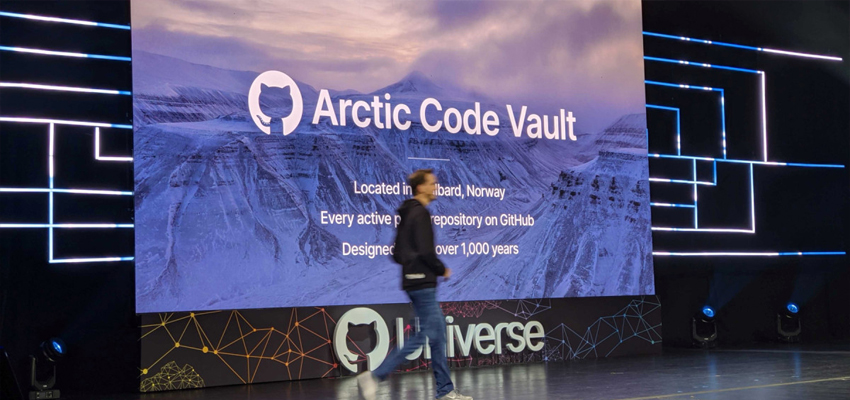
Today I suddenly noticed a new badge on my GitHub profile, “Arctic Code Vault Contributor” — which translates to “Arctic Code Vault Contributor” — so I looked into this Arctic Code Vault (Arctic Code Vault).

The Arctic Code Vault Plan
On November 14, 2019, GitHub announced the Arctic Code Vault plan. The main idea is to preserve open-source code for the long term using film made by Piql AS, coated with iron oxide powder. Piql says this material can last 750 years under normal conditions and 2,000 years in a cold, dry, low-oxygen cave.
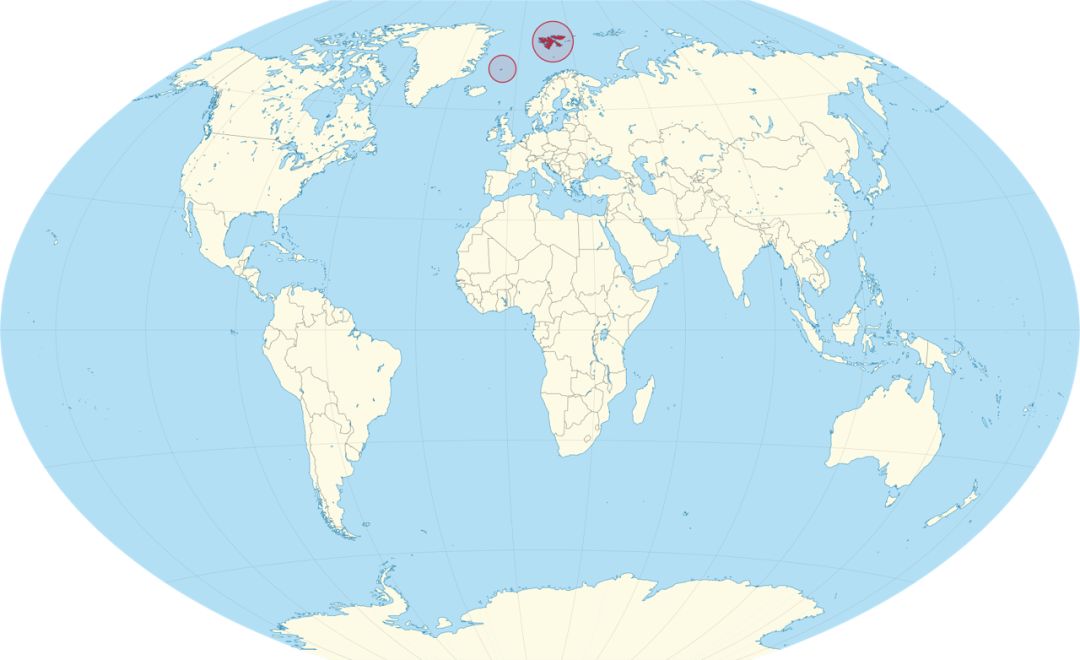
The code will be stored in an abandoned coal mine in the Svalbard archipelago of Norway, the same town chosen to host the global seed vault. The Svalbard permafrost is one of the northernmost towns on Earth, extending hundreds of meters below the surface. Archivists believe the cold and near-constant conditions help preserve it.
Starting February 2, 2020, thousands of popular GitHub projects (such as Blockchain and WordPress) and programming languages (such as Rust or Ruby) joined the Arctic Code Vault plan, which expanded to all public repositories in February 2020.
Protecting Human Civilization
GitHub says open-source code is the common property of all humanity. Even if human civilization is destroyed by war, the hope is that future generations can use this code to quickly rebuild technology.
So they announced a code archiving plan, the Arctic Code Vault, to bury it underground at the North Pole and preserve it for 1,000 years.
The repos stored on film are decided by each project’s star count, dependencies, and expert advisor opinions, and actively maintained projects are excluded.
The stored snapshot consists of the HEAD of each repo’s default branch, with any binary files larger than 100 KB removed. Each repo is packaged as a TAR file.
The film is then placed in steel-walled containers and stored in a sealed chamber of the abandoned mine in Svalbard.
The reason Svalbard was chosen is that it is a demilitarized zone under international convention, safe from the ravages of war. And it is cold year-round, with hundreds of meters of permafrost. The stable, cold environment is ideal for storing film.
The repos stored on film are decided by each project’s star count, dependencies, and expert advisor opinions, and actively maintained projects are excluded.
The stored snapshot consists of the HEAD of each repo’s default branch, with any binary files larger than 100 KB removed. Each repo is packaged as a TAR file.
The film is then placed in steel-walled containers and stored in a sealed chamber of the abandoned mine in Svalbard.
The reason Svalbard was chosen is that it is a demilitarized zone under international convention, safe from the ravages of war. And it is cold year-round, with hundreds of meters of permafrost. The stable, cold environment is ideal for storing film.