

As webmasters carefully build up their sites, traffic keeps growing, and most will then want to place ads to monetize that traffic — covering server and bandwidth costs or even turning a profit. New webmasters just getting into site advertising may not know the jargon; many ad models are labeled CPA, CPS, CPM, CPT, CPC. Today I’ll explain what they mean for new webmasters. There are plenty of formal definitions online, so rather than copy those, I’ll explain in plain language.
Let’s look back at the history of online advertising, in roughly chronological order:
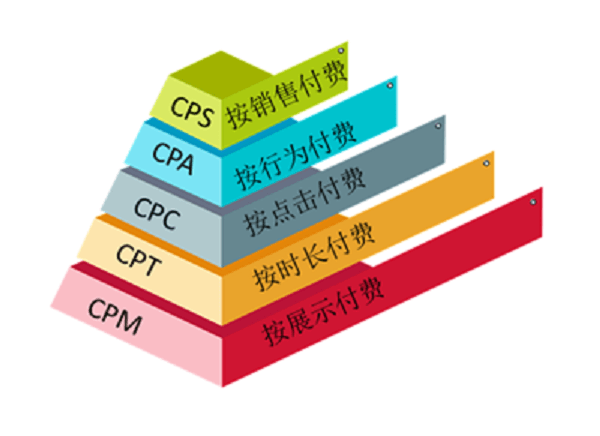
CPM: Pay Per Impression
CPM is easy to understand: if I display your ad one thousand times, the site charges for one thousand impressions. But there’s a catch — if the ad sits far down the page and only shows after scrolling, users may never actually see it, yet it still counts as an impression, so CPM isn’t fair to advertisers.
CPT: Rent the Ad Slot by Time
CPT is essentially the “landlady” model: an ad slot’s price depends on its position on the page, rented by the month regardless of impressions or clicks, charged as a fixed one-time rent. Most large Chinese sites use this model. But there’s also a problem — large sites can’t publish real-time daily visit counts or unique-visitor numbers, so advertisers don’t know how their ads perform, and the visit numbers the sites report themselves aren’t trustworthy.
CPC: Pay Per Click
CPC is the main ad form for small and mid-sized sites today: you’re charged each time the ad is clicked. But some feel it’s unfair too — if a user sees the ad but doesn’t click, the site earns nothing; likewise, if the site clicks its own ads it defrauds the advertiser, so most use a third-party ad network as a middleman to detect fraud.
CPA: Pay Per Action
CPA pays per valid action — for example, a set fee for successfully registering one user, or for completing one survey. CPA carries the most risk for the site and is the hardest to do, but also has the highest per-unit payout; it comes down to how much users trust the site.
CPS: Pay Per Sale
CPS is essentially a sales commission, used mostly for e-commerce ads. For example, if a user enters a shopping site from your site and buys 100 yuan of goods, you get a portion of the sales commission; the more they spend, the more the site earns. This model favors the advertiser but isn’t great for the site.
Wrap-up
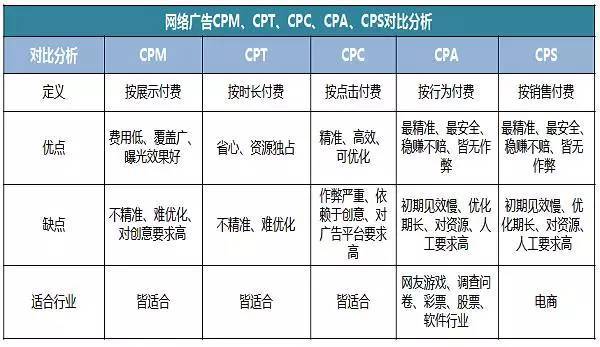
CPM and CPT favor the site, while CPC, CPA, and CPS favor the advertiser. The more popular pricing models right now are CPM and CPC.
On unit price, CPT and CPM are relatively cheap, CPC sits in the middle, and CPA and CPS cost much more. But this only compares unit price — if users trust the site a lot, CPA and CPS can earn more; if they don’t trust it much, CPC is the better pick.
On ease of fraud, CPT and CPM are easiest for the site to cheat — there are many ways to inflate traffic; CPC is moderately hard, with some technical defenses but still agencies that click ads on a monthly contract; CPA is moderately-to-hard, doable if you spend enough time registering fake users; CPS is almost impossible to cheat, since it’s based on sales commission — if you could fake real sales, you’d be better off reselling the product yourself.