
After moving the blog to Alibaba Cloud and using many of its services, let me review Alibaba Cloud’s products. I’ve used many providers before: Meicheng Internet, Zitian Network, Donglu Internet, HiChina, and some small unknown ones.
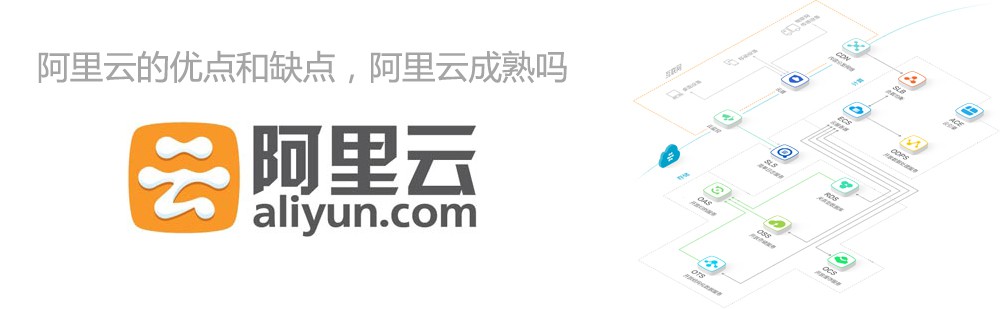
 The pros and cons of Alibaba Cloud — is Alibaba Cloud mature?
First, let me complain about Alibaba Cloud’s shortcomings, with some cautions before you buy:
- Alibaba Cloud Server (ECS) disk I/O — this is the one everyone runs into most; everyone reports that cloud disk I/O is slower than ordinary physical servers, because Alibaba Cloud disks have triple backup, meaning when you create a file, it’s actually created on three servers, so I/O speed isn’t as fast as ordinary physical servers. Alibaba Cloud officially is also looking for a solution and will soon launch SSD ECS, but the price will surely be high. So friends with high disk I/O requirements should note this and consult on disk I/O speed before buying.
- Alibaba Cloud Relational Database (RDS) — it’s basically a database, but connecting is troublesome; there are only two options to switch between (note: switch, not use simultaneously) — internal and external network modes. That is, either use the external network or the internal network; you can’t use both at once. This is quite bizarre — our services can’t all come from Alibaba Cloud ECS, nor can they all come from the same data center; very unreasonable. Alibaba Cloud has now noticed this feedback and is working on a method to coexist internal and external networks.
- Alibaba Cloud ECS disk expansion — disk expansion on Alibaba Cloud is also quite bizarre. As cloud computing, elastic expansion is a must, but Alibaba Cloud ECS disks can’t be arbitrarily resized. So what if the disk isn’t enough? Buy a bigger one and mount it, copy the original disk data into it, then delete the old disk — that’s the “disk expansion” plan. Bizarre.
- Elastic Scaling (ESS) — first, this “elastic” doesn’t mean elastic increase/decrease of CPU, memory, or bandwidth, but increase/decrease of ECS instances. Yes, it buys you another ECS, not adjusting your ECS performance. That’s not what I wanted. Now the good about Alibaba Cloud:
- Independent IP — when you buy an ECS, you definitely get an independent IP, used only by you, and the IP I got is clean, with no history of use.
- Network access — Alibaba’s network access is BGP; speed experiences across the country are great; humans barely notice the difference between Beijing and Hangzhou.
- Fast filing response, free SF Express mailing of the filing backdrop — I highly praise this; Alibaba’s filing response is very fast, almost finishing your materials in a day, and the backdrop arrives the next day; the rest is waiting for the 20-working-day administration review.
- The technical support team is professional; forums, blogs, and tickets provide very good after-sales support — any problem has someone to help solve it.
- Relational Database (RDS) — the underlying architecture already has master-slave backup; you don’t need to set up master-slave backup yourself; full physical backups automatically every day — very safe and fast.